Resources
Insights on building trusted, permissioned, and compliant data systems for the AI era.

Recent Articles
From Web2 to Web3: A No-Nonsense Guide for Businesses Ready to Make the Leap
Are you running a company and hearing all this buzz about Web3? Feeling like you're on the edge of a digital revolution but not quite sure how to dive in? Well, buckle up, because I'm about to walk you through a practical, no-nonsense guide on making that leap from Web2 to Web3. It's not just about keeping up with the times; it's about being a part of shaping the future.
- Diving into the Deep End of Web3 Culture and Community:
- The Web3 Vibe: First things first, Web3 is all about decentralization, power to the people, and a big ol' sense of community. It's like moving from a one-man show to a giant, collaborative flash mob.
- Join the Club: Get yourself out there! Join Web3 forums, hop onto Discord channels, and attend virtual meetups. It's like going to the coolest, nerdiest parties where everyone's talking about blockchain and NFTs.
- Collaborate, Don't Compete: In the Web3 world, sharing is caring. Consider open-source projects as your new BFFs. It's about building together, not just building alone.
- Blockchain: It's Not Just Bitcoin Anymore:
- Smart Contracts, Smarter Business: Imagine contracts that self-execute without any fuss. Welcome to the world of smart contracts. They're like having a robot mediator who always follows the rules.
- Store It Safe and Sound: Explore decentralized storage options. It's like moving your precious data from a vulnerable little shed to a secure, impenetrable fortress.
- Transparent as Glass: Use blockchain to show your customers exactly what's happening behind the scenes. It's like giving them a backstage pass to your business operations.
- Tokenize Everything (Well, Almost):
- Making Assets Digital: Think about turning your products or services into digital tokens. It's like
- turning physical gold into digital gold nuggets that people can collect and trade.
- Crypto Payments? Yes, Please!: Start accepting cryptocurrencies. It's not just cool; it's what forward-thinking businesses do.
- Teach to Reach: Educate your customers about this whole token thing. Knowledgeable customers are happy customers.
- DApps: The New Frontier for Your Services:
- Spot Your DApp Opportunity: Figure out what part of your business could live on a blockchain. It's like moving your shop from a busy street to a spot on a digital cloud.
- Give Power to Your People: Build DApps that let users take the wheel. Imagine a platform where your users aren't just visitors, but co-pilots.
- Seek the Tech Gurus: If building a DApp sounds like rocket science, partner up with Web3 developers. It's like hiring a guide for your digital Everest expedition.
- Rethinking Privacy and Data – It's a Big Deal:
- User Data? Handle with Care: Shift towards models that let users own their data. Think of it as returning something you borrowed – it's just the right thing to do.
- Be Clear, Be Transparent: Be open about your data usage. It's like telling your customers, "Hey, here's what I'm doing with the info you gave me."
- Privacy by Design, Not as an Afterthought: Build your services with privacy baked right in. It's like making a cake where every slice has an equal amount of the good stuff.
How Permission Powers Your Web3 Advertising Adventure
So, you're pumped and ready to take on the Web3 world, but where does Permission fit in? Well, if you're an advertiser, Permission is like your trusty sidekick, guiding you through the Web3 wilderness with ease and expertise.
Understanding Web3 Advertising: First off, Permission is your go-to guru for all things related to advertising in the Web3 space. It's like having a personal navigator who knows every twist and turn of this new digital landscape.
Leveraging Data with Respect: In the Web3 world, user data is a treasure that needs to be handled with utmost respect. Permission shows you how to ethically use data, ensuring that your advertising strategies are not only effective but also privacy-conscious. It’s like being a respectful guest in someone's digital home.
Token Rewards = Engaged Customers: Here’s where it gets really interesting. Permission harnesses the power of ASK tokens to reward users for their engagement. Imagine showing your ad to someone and then thanking them with a digital token. It’s a game-changer in building customer loyalty and trust.
Customized Web3 Strategies: Whether you're a seasoned crypto expert or just dipping your toes into the blockchain waters, Permission tailors strategies that align with your business's Web3 journey. It’s like having a custom-made roadmap for your brand's digital expedition.
Seamless Integration into the Web3 Ecosystem: Transitioning from Web2 to Web3 can seem daunting, but with Permission, it's a smooth ride. They help integrate your advertising strategies into the Web3 ecosystem, ensuring that you're not just catching up with the trends but are setting them.
Educational Resources and Support: Feel a bit lost? Permission offers resources and support to educate you and your team about the nuances of Web3 advertising. It’s like having a personal tutor in this exciting new digital realm.
Community and Network Building: Tap into Permission's vibrant community and network. Collaborate, learn, and grow with others who are just as excited about this new era of the internet.
Wrapping It Up: Your Web3 Journey Starts Here
Jumping into Web3 isn't just a smart move; it's a thrilling adventure into uncharted territories. By immersing yourself in the culture, getting blockchain-savvy, tokenizing like a pro, exploring the world of DApps, and rethinking data privacy, you're not just adapting; you're paving the way for a new era of digital interaction, where brands and users own their data.
Understanding 2024's Data Privacy Landscape
In the ever-evolving digital world, 2024 has been a landmark year for data privacy. With new legislations coming into force globally, there's a seismic shift in how personal data is handled, stored, and shared. But what does this mean for the average internet user and businesses alike?
Primarily, these laws focus on user consent and transparency. They mandate that companies must clearly communicate what data they're collecting and why. This is a big win for consumer rights, ensuring that personal information isn't misused or collected without explicit permission. For businesses, while it might initially seem like a hurdle, there's a silver lining – the rise of permission advertising.
Permission advertising, at its core, is about respecting the user's choice. It's a model that aligns perfectly with the ethos of the new data privacy laws. This approach asks for consent before serving ads, ensuring a more personalized and less intrusive experience for the user. In turn, businesses benefit from higher engagement rates, as ads are shown to an audience that has already expressed interest.
What stands out in 2024's laws is the emphasis on clarity and choice. Users now have more control over their digital footprint than ever before. They can choose who gets access to their data and for what purpose. This user-centric approach is not just a legal requirement; it's a new standard in digital ethics.
For businesses, adapting to these changes might seem daunting. However, embracing permission advertising can be a game-changer. It's not just about compliance; it's about building trust. In an era where data breaches and privacy concerns are rampant, earning user trust is invaluable.
As we delve deeper into 2024, the impact of these laws is becoming increasingly apparent. They are reshaping the digital advertising landscape, putting the power back in the hands of the user, and paving the way for a more ethical and effective advertising model.
A New Era of Advertising
As the digital world aligns with the new data privacy laws of 2024, Permission emerges as a trailblazer in ethical advertising. Harnessing the power of web3 technologies, Permission is redefining the relationship between consumers and advertisers in this new landscape. But how exactly does it make a difference?
Firstly, Permission leverages the principle of 'ask first, advertise later.' By integrating user consent directly into its advertising model, it ensures that every ad shown respects the user's privacy and choice. This approach doesn't just comply with the 2024 data privacy laws; it celebrates them. Users are no longer passive recipients of ads; they're active participants who control what they see and when they see it.
Moreover, Permission taps into the potential of blockchain technology to revolutionize how user data is managed. Blockchain's inherent security and transparency features mean that user data is stored securely and used ethically. This not only aligns with the legal requirements but also builds a foundation of trust and reliability – something that's crucial in the post-2024 digital ecosystem.
But Permission's innovation doesn't stop at compliance and security. It also offers a unique value proposition for users – they earn rewards for engaging with ads. This shifts the paradigm from intrusive advertising to a value exchange model, where users are compensated for their attention and data. It's a win-win; users enjoy a more respectful browsing experience, while advertisers connect with a more engaged and receptive audience.
For advertisers, Permission is an example of effectiveness and efficiency in the post-2024 world. By reaching out to users who have opted in, advertisers witness higher engagement rates and better ROI. They're not just shooting in the dark; they're engaging with a willing and interested audience. This targeted approach, underpinned by ethical practices, sets a new standard in digital advertising.
As the digital world navigates the complexities of 2024's data privacy laws, Permission stands out as a leader and innovator. By blending user consent, blockchain security, and reward-based advertising, it offers a glimpse into the future of digital marketing – a future where ethics, efficiency, and user empowerment go hand in hand. This isn't just advertising; it's advertising with permission, and it's setting the stage for a more respectful and rewarding digital world.
Harmonizing Data Privacy and Advertising
In the previous sections, we explored the transformative impact of 2024's data privacy laws and Permission's pioneering approach to permission advertising. This final piece harmoniously weaves these threads together, illustrating how Permission is not just adapting to this new legal landscape but is actively enriching it, creating a symbiotic relationship between legal compliance and ethical advertising practices.
This harmonization is evident in how Permission embodies the core principles of the 2024 data privacy laws. These laws advocate for user consent and transparency in data handling - principles that are deeply ingrained in Permission's DNA. By prioritizing user consent and offering rewards for engagement, Permission transcends mere compliance, fostering an environment of trust and mutual respect. This approach not only aligns with the letter of the law but also with its spirit, advocating for a more ethical and user-centric digital experience.
Furthermore, Permission's model of advertising serves as a bridge between the legal requirements and the practical needs of advertisers. In a landscape often marked by intrusive and indiscriminate advertising, Permission offers a refreshing alternative. By engaging users who have willingly opted-in and compensating them for their attention, advertisers on Permission connect with a more receptive and engaged audience. This not only ensures higher effectiveness for advertisers but also demonstrates that ethical advertising can be both compliant and commercially viable.
The synergy between the 2024 data privacy laws and Permission's innovative model marks a significant shift in the digital advertising paradigm. It's a shift from a data-driven to a consent-driven approach, where the value is placed on ethical engagement rather than mere data exploitation. This synergy is not just beneficial for users and advertisers; it's a blueprint for the future of digital interactions, where respect for personal data and ethical advertising practices are not just encouraged but are the norm.
Permission's role in this new era of data privacy is pivotal. It stands as a beacon of how businesses can creatively and ethically engage with consumers in a legally compliant manner. By harmonizing the principles of the 2024 data privacy laws with its innovative advertising model, Permission is not just navigating the new landscape; it's shaping it, heralding a future where digital advertising is respectful, rewarding, and responsible.
Web3 Marketing Survey: Statistics for Advertisers
Permission is pleased to present insightful findings from our recent survey, involving 1,299 respondents, and shedding light on the dynamic landscape of brand-user relationships in Web3.
Survey participants were aged 18+ and included Permission community members and Internet users across the USA and the rest of the world. Delving into the intricate relationships between individuals and brands, the Permission community survey focused on the critical issues of data ownership and mistrust stemming from data exploitation.
The results offer a compelling glimpse into the perceptions and sentiments of Internet users in today’s rapidly evolving digital landscape. By capturing valuable insights into topics such as users’ willingness to provide their email addresses to brands, concerns about data privacy and leaks, the prevalence of spam messaging, and the belief in fair compensation for data sharing, the statistics underscore the need for a more transparent, respectful, and equitable data economy.
The following statistics serve as a crucial foundation for understanding the transformative potential of projects like Permission, which can reshape the way brands and users engage, fostering a more empowered and ethical digital landscape.
The Spam Messaging Epidemic
In today’s web, it’s commonplace for companies to harvest, share, sell your data and retarget you with spam across the web and in your inbox, disrupting your online experience.

Such high percentage emphasizes user frustration with unwanted spam emails and texts, and the need for brands to engage customers respectfully and directly. Empowering users and valuing data ownership is crucial. Transparent, personalized communication strategies, backed by explicit consent, enhance reputation and counter spam, fostering meaningful customer connections.
By obtaining explicit consent (i.e., ASKing Permission) and offering personalized content, brands can mitigate the proliferation of spam and foster strong 1:1 customer relationships.
Demand for Data Ethics & Value Exchange

For brands, this underscores the evolving expectations of users in the digital age. If brands want users to opt-in to their marketing and share their data, they must offer an incentive. A rewards program such as Permission’s tokenized reward, ASK, can lead to stronger user trust and loyalty, as brands align with the growing demand for ethical data treatment.
For users, this statistic reiterates the growing awareness of the value their personal data holds and their desire for agency in its utilization. Web3’s potential to enable users to monetize their data could empower individuals economically while also fostering a more balanced and respectful data-sharing landscape.
The Data Breach Dilemma

The fact that 7/10 users worry about their email address being exposed via data breach underscores the importance of prioritizing data security and privacy. The trust and loyalty of users hinge on brands’ ability to protect sensitive data from unauthorized access or breaches.
For users, this accentuates the urgency for Web3’s promise of enhanced data ownership and control. Users will be able to minimize the risks associated with data leaks, as they maintain direct authority over who accesses their information.
Is Your Email Address Compromised?

Data is property, so the fact that 85% of users feel their property ends up in the hands of a stranger signifies that something has to change. Brands need to create a respectful, transparent data-sharing atmosphere by prioritizing user consent, and enabling control over personal info like emails. Consent-driven practices rebuild trust in a digital landscape valuing user sovereignty and data ownership.
Survey Takeaways and Action points for Web3 marketers:
Prioritize Transparent Data Economy: Acknowledge the demand for transparency, respect, and equity in data handling as Web3 reshapes the digital landscape.
Combat Spam Effectively: Engage consumers directly and respectfully. Value data ownership, employ personalized communication strategies with explicit consent to build trust and counter spam.
Empower Users and Reduce Spam: Leverage Web3’s potential to empower users, granting them control over their data to minimize spam. Utilize decentralized platforms and self-sovereign identities for selective data sharing.
Safeguard User Data: Address user concerns over data breaches, prioritizing data security and privacy. Build trust by ensuring sensitive data is protected against breaches.
Embrace Web3’s Data Ownership Promise: Recognize Web3’s value in enhancing data ownership and control for users. Leverage this urgency to enhance trust and reduce risks associated with data leaks.
Incentivize Ethical Data Sharing: Adjust to changing user expectations by offering incentives like ASK token rewards for user opt-ins and data sharing. Align these practices with ethical data handling for increased trust and loyalty.
Empower Users Economically: Acknowledge users’ growing awareness of personal data value. Enable users to monetize their data, promoting economic empowerment and fostering respectful data-sharing norms.
Respect Users’ Data Desires: Create a respectful and transparent data-sharing environment. Prioritize user consent to rebuild trust and credibility in a landscape valuing user sovereignty.
Leverage Decentralization for Data Control: Embrace decentralization to give users ownership and control over their data, including email addresses.
Permission: an Example for Web3 Marketers
A big thank you to all who participated in this survey! Permission is routinely seeking ways to enhance its platform and solve problems for users and advertisers in Web3. Our mission is to help individuals own and securely earn from their data and to connect advertisers and consumers on a permission basis. The insights and feedback gained from this survey affirm our product development efforts and validate that we continue to be on the right path. We look forward to further fulfilling our mission and serving as the leading example for marketers in Web3.
Web3 Marketing: the Democratization of the Internet and what Marketers Need to Know
Web3, the third generation of the internet, is set to revolutionize the digital advertising landscape by introducing a new level of democratization. This shift promises to transform how marketers operate, offering opportunities for innovation while also presenting new challenges. Understanding these changes is crucial for Web3 marketers aiming to stay ahead in this rapidly evolving environment.
What is the Meaning of Democratization in Web3?
Web3 represents a significant shift from the centralized structures and advertising models of Web2. The democratization of the internet through Web3 means a move towards a more user-centric model, where users own and have greater control over their data and can directly interact with digital services without intermediaries.
Web3's Blockchain-Powered Decentralization
Blockchain technology, a key component of Web3, enables this decentralization. It allows for the creation of decentralized applications (dApps) that operate on peer-to-peer networks, reducing reliance on centralized authorities. This shift has profound implications for businesses, particularly in terms of data management, user engagement, and business models.
Implications for Web3 Advertisers
Data Ownership: In the Web3 digital advertising era, users have more control over their data. This shift challenges businesses to rethink their data collection and usage practices. Advertising platforms that harvest and monetize user data without user permission will be overtaken by platforms that enable users to control and be compensated for their data. To succeed in Web3, advertisers will need to prioritize transparency and user consent, not only to maintain compliance, but also to build trustful relationships with customers.
New Business Models: The democratization of the internet opens up possibilities for new advertising strategies. For instance, tokenized rewards enabled by blockchain technology can incentivize user engagement and participation. Advertisers can leverage these strategies to build more vibrant and engaged communities.
Decentralized Finance (DeFi): Web3 also brings the rise of DeFi, offering opportunities for users to access financial services in a decentralized manner. This could lead to more efficient and inclusive financial systems. Advertisers that incorporate strategies that compensate users with tokenized rewards for their engagement can gain exposure to the DeFi ecosystem and attract new users and customers.
Non-Fungible Tokens (NFTs): The emergence of Non-Fungible Tokens (NFTs) is another intriguing development in the Web3 era. These unique digital assets have found applications ranging from digital art ownership to virtual real estate. For Web3 marketers, NFTs can be utilized as a mechanism to attract new customers or as a loyalty reward to foster engagement and create unique digital products or services, opening up new revenue and customer engagement avenues.
Real Life Examples for Marketers in Web3
In 2023, eCommerce powerhouse Amazon ventured into the Web3 ecosystem by targeting Non-Fungible Tokens (NFTs). They sought to establish a digital assets enterprise within their primary platform, indicating a potential move towards blockchain-based games and NFT collectibles. While it remained unclear whether a marketplace would be launched, this move alone highlighted the disruptive potential of large corporations entering the Web3 space. Amazon’s CEO, Andy Jassy, expressed belief in the significant growth potential of NFTs, indicating a future where cryptocurrency could become more integral to their retail business.
Understanding the power of Web3 advertising, Starbucks’ Odyssey program is another commendable example. This initiative gamifies user engagement, offering ‘journeys’ that lead to ‘digital stamps’ and points. These points, accumulated through active participation and redeemed for real-world rewards, inject a new level of interactivity into the customer experience and seamlessly integrate blockchain technology into their traditional loyalty program framework.
Starbucks has deftly converted the points accrued from digital stamps and NFTs into real-life utility. Redeemable perks, such as the ability to enjoy 30 days of free coffee, valued up to $10 per day, has not only stirred up buzz, but also markedly heightened daily engagement with the brand.
Starbucks’ Odyssey showcases how brands can flourish in the Web3 world by combining traditional marketing strategies with innovative technologies. By focusing on community and leveraging Web3 marketing strategies, Starbucks is driving customer loyalty and carving out a robust presence in the Web3 space.
Challenges and Risks for Marketers in Web3
While the opportunities presented by Web3 are immense, it’s also important to acknowledge the challenges and risks. The regulatory landscape for blockchain technologies is still evolving, and businesses must navigate this uncertainty. This includes compliance with regulations such as the California Privacy Rights Act (CPRA) and the General Data Protection Regulation (GDPR), which mandate stringent data protection measures.
Additionally, while decentralization brings many benefits, it also presents new security challenges that businesses must address. As data becomes more distributed, businesses will need to implement robust security protocols to protect user data and prevent breaches. Balancing the advantages of decentralization with the need for security and regulatory compliance will be a key challenge in the Web3 era.
How to Market Successfully in Web3
To stay ahead in the Web3 era, advertisers need to move away from the surveillance marketing tactics that have dominated Web2 and embrace the principles of democratization. This means prioritizing user consent, empowerment, transparency, and decentralization. Here are a few strategies:
Embrace Transparency: In a world where users have more control over their data, transparency is key. Advertisers should be clear about how they collect and use data, and ensure they have user consent.
Leverage Blockchain Technology: Advertisers should explore how they can leverage blockchain technology, whether it’s by adopting tokenized rewards for increasing engagement, using smart contracts, or integrating DeFi services.
Engage with the Community: The democratization of the internet means users have more power than ever before. Web3 marketers should engage with their communities, listen to their feedback, and involve them in decision-making processes.
Adapting to Change: The transition to Web3 won’t happen overnight, and advertisers must be prepared to adapt. This could involve upskilling employees, investing in new technologies, or even rethinking business models. It’s also crucial to stay informed about the latest developments in the Web3 marketing space, as the landscape is evolving rapidly.
Web3 is a testament to the power of democratization in the digital world. It presents advertisers with both exciting opportunities and formidable challenges. By understanding these changes and proactively adapting, advertisers can not only survive but thrive in the Web3 era. The future of the internet is not just here, it’s being built by us, and it’s more democratic, inclusive, and empowering than ever before.
Understanding CPRA: Implications for Advertisers
In today’s digital landscape, data privacy has become a paramount concern, both for consumers and the businesses that seek to connect with them. The California Privacy Rights Act (CPRA) emerges as a significant development in the realm of data protection and privacy regulations, carrying considerable implications for marketers and advertisers. As businesses adapt to these new regulations, it’s essential to comprehend what CPRA entails and how it impacts the advertising landscape.
What is CPRA?
The California Privacy Rights Act is a comprehensive data privacy law that builds upon the existing California Consumer Privacy Act (CCPA). Enacted by California voters in November 2020, CPRA came into effect on January 1, 2023.
Its primary goal is to enhance consumer privacy rights, giving individuals more control over their personal data and imposing stricter obligations on businesses that collect, use, and share this data.
How Does CPRA Affect Advertisers?
Expanded Definition of Personal Information: CPRA’s definition of personal information is broader than its predecessor, encompassing not only traditional identifiers but also sensitive data such as racial or ethnic origin, precise geolocation, and more. Advertisers need to ensure they are transparent about collecting and using these types of data for targeted advertising.
- Right to Limit Data Use: CPRA introduces the concept of the “right to limit use,” allowing consumers to restrict how their sensitive personal information is utilized for advertising and other purposes. Advertisers must be prepared to honor these requests and adjust their targeting strategies accordingly.
- Sensitive Data Handling: Advertisers working with sensitive personal information, as defined by CPRA, must exercise increased caution. This includes obtaining explicit consent (i.e., permission) for its collection and use, and implementing robust security measures to protect this data.
- Opt-Out Mechanisms: CPRA reinforces the need for clear and accessible opt-out mechanisms. Advertisers must make it easy for consumers to opt out of the sale or sharing of their personal information for advertising purposes.
- Contractual Obligations: Businesses that process personal information on behalf of advertisers, such as data analytics providers or ad networks, will be subject to contractual obligations under CPRA. Advertisers need to ensure that their third-party partners are compliant with these regulations.
- Data Retention Limits: CPRA introduces limitations on how long businesses can retain consumer data. Advertisers should review and adjust their data retention policies to adhere to these new requirements.
- Children’s Privacy: The CPRA introduces new regulations for the collection and use of personal information from minors. Advertisers targeting younger audiences must comply with stricter rules and obtain parental consent when necessary.
- Enhanced Penalties: CPRA empowers the California Privacy Protection Agency (CPPA) to impose significant penalties for non-compliance, especially in cases involving data breaches. Advertisers must prioritize data security to avoid hefty fines and reputational damage.
Staying Compliant With CPRAAs advertisers navigate the changing landscape brought about by CPRA, there are several steps they can take to ensure compliance and maintain effective advertising strategies:
- Auditing Data Practices: Advertisers should conduct thorough audits of their data collection, processing, and sharing practices to identify areas that need adjustment to align with CPRA requirements.
- Reviewing Consent Mechanisms: Advertisers should revisit their consent mechanisms to ensure they are explicit, easily understandable, and encompass the expanded definition of personal information.
- Data Minimization: Adopting data minimization practices, where only necessary data is collected and retained, can help advertisers reduce their risk and streamline compliance efforts.
- Collaborating with Legal Experts: Given the complexity of privacy regulations, advertisers should seek legal counsel or privacy experts to ensure their advertising strategies are compliant with CPRA.
- Educating Staff: Training staff on the nuances of CPRA and its implications for advertising can help in maintaining consistent compliance across the organization.
- Implementing Technological Solutions: Utilizing advanced data management and protection tools can aid advertisers in meeting CPRA’s requirements, especially those related to data security and consent management.
The California Privacy Rights Act introduces a new era of consumer data protection, significantly impacting advertisers’ practices and strategies. Advertisers must adapt by revisiting their data handling processes, consent mechanisms, and targeting strategies to align with CPRA’s stringent requirements. By doing so, they can not only ensure compliance but also foster consumer trust in an era where privacy is increasingly valued.The Permission Solution
CPRA has brought into focus the significant value of user data and the growing demand for a compliant and respectful approach to data handling, where users retain control over their personal information.
Permission’s Solution for Brands Navigating CPRA
Permission’s Web3 advertising platform provides a pathway for brands and advertisers seeking to navigate the complexities of CPRA and similar regulations by embracing a user-centric and permission-based approach (which gathers users’ explicit consent for opting in and sharing their data.).
Powered by the Permission Token (“ASK”) – a proprietary digital asset that enables global advertisers to compliantly target users and offer a fair, permissioned value exchange for the use of their data – the Permission Platform returns data ownership to individual consumers by enabling them to monetize and securely grant permission for sharing their data across the digital ecosystem.
By empowering users to own their data and grant explicit permission for data access, Permission establishes ethical, transparent interactions between brands and consumers and aims to be the solution – and example – for Web3 marketers.
Web3 Permission Marketing: Enabling Brands and Consumers to build Trusted Relationships
The advertising landscape is evolving rapidly, with increasing emphasis on user privacy, data security, and value exchange. Web3 permission marketing has emerged as the future of advertising, leveraging blockchain technology and opt-in value exchange to empower and reward consumers in their relationships with brands.
The Philosophy of Web3:
The core philosophy of Web3 is about democratizing power and value, enabled by the self-custody of assets and data through blockchain technology. To embrace this philosophy in marketing, there must be a change in the nature of the relationship between advertisers and their audience. This requires moving towards a permission marketing model, where both parties interact on fair terms.
Seth Godin, who coined the term “permission marketing,” once said, “Permission marketing is the privilege (not the right) of delivering anticipated, personal, and relevant messages to people who actually want to get them.” Web3 permission marketing elevates this concept by integrating blockchain technology and adopting values that empower individuals with ownership of their data assets.
Key Principles of Web3 Permission Marketing:
- User empowerment, Data ownership, and Opt-in value exchange: Web3 permission marketing emphasizes user autonomy, allowing users to decide how, when, and with whom they engage. This includes the ability to self-custody their data and receive value from its monetization. Through this, a fair value exchange is created, incentivizing users to engage with brands that align with their interests.
- One-to-one marketing: Web3 permission marketing focuses on individualized interactions, personalization, and fostering long-term relationships with customers.
- Customer lifetime value (CLV): By focusing on long-term relationships and loyalty, Web3 permission marketing emphasizes the importance of maximizing the value a customer brings to a brand over their entire relationship.
- Transparency and trust: By offering clear and honest communication, Web3 permission marketing builds trust between brands and users, leading to stronger relationships and increased loyalty.
- Personalization and relevance: Brands can tailor their marketing messages and offers to individual preferences and needs with permission from users, resulting in a more relevant and engaging experience.
- Long-term relationships: Transparency, trust, and value exchange foster an environment where brands can build long-term relationships with their customers, emphasizing customer lifetime value.
- Compliance and adaptability: Web3 permission marketing provides a framework for compliance with privacy laws like CPRA and GDPR, enabling brands to stay ahead of the regulatory curve while respecting user privacy.
Benefits of Web3 Permission Marketing for Users and Brands:
For users, Web3 permission marketing offers greater control over their data, privacy, and engagement with brands. They can choose which brands to interact with and receive rewards in the form of cryptocurrencies or other digital assets, enhancing their overall experience and fostering loyalty.
For brands, this approach enables better targeting, increased relevance, and the ability to build long-term relationships with customers. By respecting users’ preferences and offering a fair value exchange, brands can create a more sustainable marketing strategy that drives growth in the Web3 world.
Leveraging Community Power in Web3: Starbucks Odyssey

Understanding the power of Permission Marketing in the Web3 space, Starbucks’ Odyssey program stands as a commendable example. This initiative gamifies user engagement, offering ‘journeys’ that lead to ‘digital stamps’ and points. These points, accumulated through active participation and redeemed for real-world rewards, inject a new level of interactivity into the customer experience.
In addition to these engaging journeys, Starbucks has made a successful foray into the realm of NFTs. They released two NFT mints that sold out within minutes, each also carrying point values, seamlessly integrating blockchain technology into their traditional loyalty program framework.
Starbucks has deftly converted the points accrued from digital stamps and NFTs into real-life utility. Among a range of redeemable perks, one has caused quite a stir: the ability to enjoy 30 days of free coffee, valued up to $10 per day. This tangible reward has not only stirred up buzz, but also markedly heightened daily engagement with the brand.
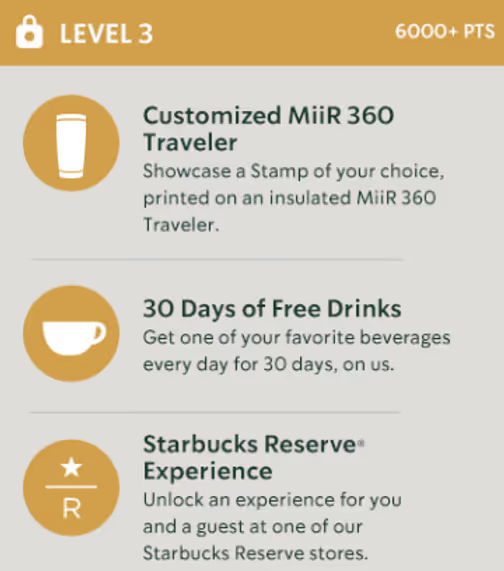
Starbucks’ Odyssey showcases how brands can flourish in the Web3 world by combining traditional marketing strategies with innovative technologies. By focusing on community and leveraging permission marketing, Starbucks is driving customer loyalty and carving out a robust presence in the Web3 space.
Challenges and Potential Obstacles
While Web3 permission marketing offers numerous benefits, it also faces several challenges that need to be addressed to unlock its full potential:
- Scalability: As Web3 permission marketing gains traction, scalability becomes crucial. Ensuring the ability to handle high transaction volumes is essential for the growth of this marketing approach.
- Regulation and compliance: Web3 permission marketing must navigate the complex regulatory landscape surrounding privacy, data ownership, and digital asset management. Adhering to privacy regulations like GDPR and CPRA is critical for maintaining user trust.
- Adoption and education: Widespread adoption of Web3 permission marketing requires users and brands to understand its benefits and embrace its core principles. Education and awareness campaigns are crucial to driving adoption and fostering a healthy ecosystem for Web3 permission marketing.
Embracing the Future of Advertising: Web3 Permission Marketing
Web3 permission marketing is poised to revolutionize customer engagement and loyalty by prioritizing trust, transparency, and value exchange. By empowering users and enabling brands to build long-term relationships with their customers, Web3 permission marketing offers a more sustainable and ethical approach to advertising in the decentralized world. As the technology evolves and adoption increases, Web3 permission marketing will likely become the new standard for customer engagement, transforming the way we think about advertising and brand-consumer relationships. At Permission, we are committed to embracing these principles and incorporating them into our solutions, helping brands and users alike navigate and thrive in this new era of digital marketing.
Omnichannel Includes Web3
Web3 represents a unique and untapped opportunity for brands to develop trust and transactions with consumers. The value exchange and loyalty rewards programs available in Web3 are a paradigm shift that sets the stage for a new era of engagement between brands and consumers.
“Web3 technology definitely has the potential to help us build some really great new consumer experiences” ~ Suzie Caldwell, General Manager Client Product & Strategy, News Corp.
Evolution of the web and omnichannel marketing
The web is evolving into a more consumer-centric landscape. Consumers are gaining greater control and ownership over their data and digital identities. In a nascent but fast-evolving Web3, blockchain is the technological lynchpin. Some argue that BigTech’s data stronghold coupled with consumer data protection legislation are accelerating development of Web3. As a marketer, you may be wondering – what’s the big deal?
Web3 brand manners: ask first, then engage
Web3 is an opportunity for brands to more directly engage with consumers, regaining and/or establishing new levels of trust. In Web2 typical ad delivery is based on an interruptive model – ads are injected, float over content, or are auto played, creating a subpar user experience for consumers. In contrast, the Web3 advertising model is about asking permission before a brand tells its story or makes an offer. The approach of brands asking consumers for permission to engage is core to the Web3 ethos. It is only a matter of time before the “ask first” advertising tactic becomes standard protocol for digital marketers.
Taking this opt-in experience one step further, consumers are knowingly agreeing to share their data with a given brand in exchange for rewards – such as tokens or non-fungible tokens (NFTs). In contrast, where Web2 is criticized for serving Big Tech profits, Web3 is about value exchange and giving consumers their fair share of the action. It begs the question, if marketers side with consumers in this construct, will marketers benefit?
“Marketers can pay or incentivize consumers for their data. While this is a higher upfront cost, the ROI from the campaign run off of this data will likely be higher. This way, marketers have accurate data that comes right from their consumers.” ~ Chad Brooks, Editor, Business.com
Digital Wallets in Web3
Digital wallets are positioned to serve as the identity for consumers in the digital days ahead, paving the way for next-gen personalized ad targeting and campaign analytics. The ability to sign in via a wallet is a massive shift from traditional password and login credentials (including headaches with username and password fatigue).
As digital wallets become the go-to for digital marketing and analytics, innovative brands will see that wallets behave much like email addresses, enabling what cookies do but in a more consumer-friendly way. Instead of sleight of hand data brokering, hashing and clean rooms – on-chain analytics and analysis of digital assets held in wallets will become the norm.
“Crypto wallets will be connected to everything users already do on the internet and in every online activity yet to come.” ~ Michael Calce, CEO of DecentraWeb
Of course, Web3 is a work in progress – the ability for brands to deliver messaging that includes a value exchange (e.g. crypto micropayments and NFTs) with consumers is a massive paradigm shift that will evolve over the next several years. However, as the saying goes, the early bird catches the worm. Brands that lean into Web3 sooner than later have the opportunity to learn the nuances, while earning mindshare with consumers.
Should you wait and see for Web3?
Web3 is built on trust, transparency and ownership. Meanwhile, brands seeking to tap into crypto adopters and crypto curious consumers will have a compelling opportunity to engage and earn trust. Brands that introduce consumers to cryptocurrency or NFTs will maintain a special relationship with those individuals as Web3 becomes mainstream. Sitting on the sidelines is safe, but for how long? As a marketer, being a first-mover can be equally exhilarating and challenging. Brands typically allocate agency partners a “test and learn” budget for new technology vendors or media partners — Web3 could be viewed as either.
“We are still very early, but not learning how to play the game is the biggest risk. Staying on the sideline is the biggest risk.” ~ Hrid Biswas, Analyst, Prudent Group
Building blocks for a more equitable internet
Brands need to advertise, content creators and publishers need to monetize content. Programmatic advertising will power-up as consumers get their fair share of the $600 billion ad industry in 2022. We can anticipate higher engagement rates, lifetime value, and untapped ways of value exchange via blockchain and decentralized platforms. When compounded, micropayments and NFTs earned by consumers today have the potential to make a meaningful difference in the future, not to mention serving as “thank you’s” for participating early in the Web3 movement.
Transparency in Programmatic Advertising
Why transparency in programmatic media buying matters
On a macro level, business transparency is paramount for a company to achieve success and deliver optimal performance. Regardless of industry, supply chain optimization (SCO) requires visibility across the partner ecosystem. Similar to the adage that “you’re only as strong as the weakest link,” an opaque supply chain opens the door for some partners to extract more value than they add. In the digital ad industry, complexities in programmatic buying and selling of ads creates a plethora of ways for weak links to extract or in the case of bad actors – steal – from the ad ecosystem.
In the United States, programmatic buying and selling of digital advertising will account for $123B in 2022, representing 90% of display ad spend. Transparency into where programmatic media budgets are being spent is key to unlocking media buying efficiencies. Additionally, understanding media placements is critical for protecting the brand’s reputation, while gaining valuable engagement insights that inform your business’s strategy.
Visibility is the first step to improving media efficiency
By gaining control and transparency into programmatic media buying, your business can accelerate its performance and gain greater efficiency. An analysis of performance at a granular level that enables your business to make both micro and macro level adjustments to enhance overall performance. This can include minimizing the number of partners and/or utilizing partners for specific initiatives or tactics within a given campaign.
Macro level efficiencies may include identifying high-performing supply side platforms (SSPs) or sites endemic to brand’s target audience. With robust campaign analytics in hand, media teams can explore direct relationships with preferred partners who may ultimately be able to drive further efficiencies and value.
Transparency enables a more granular view into an audience — what resonates with them and what messaging or content potentially needs to be refined. At a micro level, business intelligence provides insights across a wide range of campaign parameters, including: media technology platforms, device makes/models, browsers, ad placements and much more.
Ad fraud continues to plague the programmatic ecosystem and create inefficiencies in buying, but can be mitigated. It begins with transparency. A well-lit supply chain allows ad-buyers to identify fraudulent areas such as low viewability of ads, suspicious activity through invalid traffic and bots — traffic that bolsters surface level metrics such as CPMs (lower is better) or CTRs (higher is better) but does not result in genuine actions that improve campaign performance, nor do they benefit the business.
In what could be considered a gray area, some publishers practice media arbitrage. In order to maximize yield (ad revenue), they purchase low-cost and (arguably) low-quality ads from game apps and lesser-known sites to drive audiences which are then exposed to higher CPM ads. This practice isn’t necessarily fraudulent, but the “acquired” audiences may not align with the original target audience. However, it impacts the surface level metrics previously mentioned and likely goes undetected without media forensics.
Transparency is the key to understanding, then it becomes a catalyst for change in the way your team buys media going forward.
Protecting the brand’s reputation
Your company’s brand and reputation helps define your success. Transparency into where your ads are being placed programmatically and to whom is paramount to protecting your brand’s reputation. A family brand that prides itself on its family values cannot be seen next to controversial content without the risk of tarnishing the brand. Negative adjacency is a significant concern for media buyers during a time of user generated content (UGC), geopolitical unrest and a global pandemic. Meanwhile, media planners for an alcohol brand that targets a 21+ audience also need assurance that audience targeting is accurate to ensure they are being a good brand shepherd.
Informing your business’s strategy
Transparency in your programmatic media buying allows your business to gain valuable insights that can propel your business forward. With transparency into audience insights your business can better understand your customers and develop products and services to meet your customer’s needs. Visibility into what type of messaging resonates and with whom can inform brand positioning. For example, time and location data can inform your product offerings by market. Applying deeper insights to programmatic media buying data can truly be a differentiator between you and your competition when developing and informing your business strategy.
Programmatic advertising is a powerful tool; however, in the digital ad landscape just like any other ecosystem — value can be added or extracted by participants. The ability to implement SCO and drive optimal media performance starts with transparency.
How NFTs Take Brands to the Next Level
As marketers look for authentic ways to engage with hyperconnected and perhaps over stimulated consumers, the stage is being set for next-level brand engagement.
As more consumers join the Web3 movement, awareness and adoption of blockchain-based technologies – including non-fungible tokens (NFTs) – is accelerating.
The use case and value proposition of NFTs is virtually unlimited, allowing marketers to reimagine how their brand engages with consumers.
What are NFTs?
NFTs are unique digital assets that live on the blockchain and can be bought, sold or traded – much like art and other collectibles. NFTs are like snowflakes: no two are alike. As we will see, NFT use cases are only limited by one’s imagination – from IRL (in real life) to the metaverse.
While NFTs have been around since 2014, they’ve become significantly more popular over the last couple of years. This year, NFT sales have already eclipsed $27 billion, compared to $95.11 million in 2020 and $25.51 billion in 2021. To date, the largest NFT sale clocks in at a whopping $69.3 million, when Christie’s auctioned off digital artist Beeple’s one-of-a-kind work.
With so much market activity, it comes as no surprise that brands across a variety of verticals are developing NFT strategies in order to capitalize on the opportunity to create new touch points with consumers.
How are brands currently using NFTs?
While brand NFT strategies are largely considered to be a work in progress, NFT sales ramped from $200 million in 2020 to $2 billion in 2021.
Here are some examples of how brands are using NFTs to bolster their Web3 advertising strategies and earn mindshare with the evolving digital consumer.
Introducing our newest Pringles flavor: CryptoCrisp, an exclusive #NFT flavor created by artist #VasyaKolotusha. Only 50 exist, all starting at the price of a Pringles can. Click the link to get your *digital hands* on one! https://t.co/JA6Bas4Ez0— Pringles (@Pringles) March 17, 2021
- In March 2021, Pringles released an NFT of a virtual flavor, CryptoCrisp. The snack company gave sale proceeds directly to the artist.
- In July 2021, the Chicago Bulls created nearly 600 NFTs highlighting each of the team’s six championship rings. These pieces of digital art sold out in six days.
- In August 2021, Visa spent $150,000 on a “cryptopunk” NFT. According to Visa Head of Fintech Terry Angelos, the credit card company isn’t holding the NFT on its balance sheet and simply wanted the “commerce memorabilia …as part of our collection.”
- In October 2021, Dolce & Gabbana sold a nine-piece digital collection for $5.7 million.
- In November 2021, Budweiser sold 1,900 NFTs at $499 apiece within one hour. Shortly after that, investors were selling 75 percent of these tokens on secondary markets.
- In April 2022, an investor paid $130,000 for a pair of Nike shoes. The catch? You can’t wear them. It’s an NFT.
MNLTH #1 Artefacts info 🗿RTFKT x Nike Dunk Genesis 🦿The first RTFKT x Nike CryptoKicks NFT Sneaker imagined for the year 2052 : made of flexible screens, Galactic Exploration Outsole and Mods, powered by the Revolutionary Skin Vial Tech 👟🧪 pic.twitter.com/gn7A5mBG1e— RTFKT (@RTFKT) April 22, 2022
As these examples illustrate, advertisers and brands should be excited about the almost limitless possibilities to connect and interact with Web3 consumers. That said, NFTs deliver benefits beyond monetization opportunities, which we’ll explore in the next section.
How NFTs drive value for brands and marketers
NFTs are poised to become a business utility tool and means for brands to differentiate. From a use case standpoint, they have the ability to support:
- marketing campaigns
- revenue generation
- customer loyalty
Raise brand awareness
At the highest level, NFTs are a great marketing and branding opportunity. They’re a way to drum up some excitement around who you are and what you’re doing in an authentic, on-trend way. By releasing an NFT, brands can generate positive press and get their name in buzzworthy discussions around NFTs, blockchain, and Web3. Since you’re creating desirable collectibles and/or experiences that investors trade on a global marketplace, the potential reach is limitless.
Drive sales
A successful NFT campaign is a great way to drive sales and generate revenue. Not only can brands sell the NFTs themselves, they can also create communities around their tokens and tap into the broader NFT community. Many members of this passionate community become brand advocates for the projects they’re engaged with. To sum it up: brands can utilize NFTs to create organic communities that support ongoing marketing and sales efforts.
Boost customer loyalty
NFTs are all about artistic innovation. As such, it’s a way to set brands apart from one another — and convince customers why theirs is more worthy. Intelligent brands already see NFTs as a way to drive competitive advantage and increase loyalty. For example, Nike and Adidas are both making inroads into the NFT space in an effort to convince customers that they’re on the leading edge. Even amid market downturns or a “crypto winter,” a well-planned NFT strategy can help a brand differentiate and acquire new consumers that evolve into advocates.
Create one-of-a-kind experiences
NFTs also enable brands to offer unique experiences to their customers — the kind they can’t find anywhere else. Entrepreneur Gary Vaynerchuk, for example, promises that NFT owners will be able to access future conferences and enjoy unique perks.
All VeeCon 2022 Ticket NFTs have been airdropped to VeeFriends Series 1 holders and those who burnt BOOK GAMES tokens for a GOO VeeCon ticket. Now that you’ve received it, how do you view it? 🧵— VeeCon (@veecon) March 25, 2022
Similarly, brands are using the metaverse to deliver unforgettable virtual experiences and both selling and giving out NFTs to encourage folks to join the party.
Improve Web3 advertising
Last but certainly not least, NFTs are integral to a robust, multi-pronged Web3 advertising strategy. Brands that recognize the Web3 paradigm shift will look to create opt-in value exchanges with audiences. This includes rewarding consumers with cryptocurrency and/or NFTs in exchange for their attention and data.
Not only is this a great way to collect coveted first-party data — which is becoming exceedingly rare in a world that cares more and more about privacy — it can also help brands build direct relationships with loyal customers, whom they can continue to engage and reward over time.
Despite the recent downturn in the market, NFTs are here to stay. The sooner brands get on board, the faster they’ll be ready for Web3.
Programmatic Best Practices
Consumers are inundated with ads, many of which are not relevant
Today’s consumers are “always on,” toggling between digital devices. Consumer PC and mobile activities provide signals that enable data-driven marketing for brands that target ads based on attributes including device, content and behavior. In the digital era, programmatic advertising has been heralded as the de facto solution to deliver the right message, at the right time, to the right person. However, even with the data deluge and AI-infused technology at the marketers’ fingertips, brands still struggle to gain mindshare with the digital consumer. This is because consumers are inundated with thousands of ads on a daily basis.
In addition to hyper-targeted ad campaigns, there are mass reach and direct response campaigns simultaneously competing for eyeballs. Despite all of the programmatic potential, banner burnout is a major roadblock for brands competing in what is considered Web 2 (for historical perspective, Web 1 is considered 1990s to early 2000s). While campaign measurement and analytics continue to evolve, campaigns that drive a mere one engagement per 1,000 ads (0.1% CTR) are typically considered a success.
Instead of blaming tired creative, bad audience data, or an algorithm that missed the mark, perhaps it is the programmatic advertising model that needs a refresh? Given the glut of ads being cranked out, it’s no wonder that even the most compelling, timely ads will be glossed over. Fortunately, in rapidly evolving Web3, programmatic advertising can be reinvigorated if brands embrace asking – and incentivizing – consumers for their engagement.
Web 2 approach: attention grabbing
Historically, an advertiser’s main objective is to “grab” the consumer’s attention. This is no small feat considering attention is one of the most valuable commodities we have as human beings. As brands look for innovative ways to boost programmatic ad campaigns, the ability to grab attention is becoming more difficult if you consider that – depending on the device and demographic – anywhere from 25% to 50% of the internet population use ad blockers. It’s not a stretch to say the Web 2 advertising model is broken.
Instead of blanketing content with more intrusive and largely irrelevant ads with the hope of grabbing the consumer’s attention, what if marketers began the dialog by asking for the privilege to engage with each consumer? Better yet, what if marketers offered the consumer something of value above and beyond their product or service? This quid pro quo approach that rewards consumers for sharing their attention (and data) with brands is referred to as permission advertising.
Web 3 approach: attention asking
There is a huge difference between asking someone for permission and rewarding them for sharing information versus interrupting them for a show n’ tell, then capturing information without direct consent. The former is the ethos of what is being dubbed Web 3, while the latter is standard practice in Web 2.
As consumers increasingly tune out even the “smartest” programmatic ads, data-driven marketers will likely look to their data science teams for patterns or clues that will provide that “aha” moment that will help their brand break through the clutter. The time and brain power allocated trying to crack the programmatic code for incremental lift are typically spent in vain.
Instead, why not allocate valuable resources on ad tech endeavors that address industry challenges, such as workarounds to cookie degradation and/or strategies for obtaining first party data?
The Web 3 approach sets the stage for a transparent exchange and ongoing conversation whereas Web 2 is spurring consumer data protection and adoption of ad blockers. When you factor in rewards for sharing attention and information, the permission advertising model of Web 3 becomes very appealing for the general consumer (79% will share information if there are proper incentives). Meanwhile, a permission brand differentiates itself from the attention grabbing brands, entering a new world of consumer engagement.
Brands should add permission as a campaign tactic
Marketers and their agencies are tasked with sifting through treasure troves of consumer research and insights as they map out multi-channel campaign strategies. There is more than enough technology, data and inventory available to launch programmatic campaigns that check all of the proverbial boxes. However, the key element that should be considered is whether or not the consumer is open to a conversation with a given brand. If the answer is unknown or no, then a brand will struggle to be seen, heard or considered. If the answer is yes, the path forward is much more clear. As the saying goes, trust is earned. Think of obtaining permission to interact with a consumer as a stepping stone to earning trust.
Transparent messaging that includes an equitable value exchange between the consumer and a brand sets the stage for openness and trust. Brands that are “all in” on programmatic ads should consider permission advertising as a solution to differentiate themselves from the pack, while unlocking new engagement opportunities with consumers who’ve succumbed to banner burnout. This novel approach may become a necessity as 3rd party data exits the stage and consumers get up to speed on how their data serves to spin the flywheel for the $500 billion digital ad industry and multi-trillion dollar data economy.
Web 3 advertising takes programmatic to the next level
The machine learning and real-time decisioning capabilities popularized in Web 2 demand-side platforms (DSPs) will be leveraged using the Web 3 ethos that includes consumer data ownership. Call it a programmatic paradigm shift – consumers increasingly dictate how, where and when their attention and data is shared. Marketers and agencies who join the Web 3 movement will be well-positioned to establish trust and loyalty with consumers as we enter the next chapter of the internet and programmatic advertising.
This article originally appeared on MarTech Series and was guest authored by Permission.io Head of Ad Ops Michelle Wimmer. Click Here to view the full article.
Web3 Research Report: A New Paradigm for Brand Engagement
The next generation of the internet is consumer-led and features the tokenization of data and other personal assets. In Web3, users – not big centralized platforms – have control over their data and take part in a platform’s upside.
The problems that digital advertisers have faced in Web2 – particularly, the inability to track users and access critical user data at scale due to privacy regulations – are solved by Web3 platforms that enable advertisers to compensate consumers with tokenized rewards for their engagement and consent to share data.
By providing consumers with a clear and equitable value exchange, brands earn loyalty and trust while opening the door to a new world of engagement opportunities.
The ability for brands to target consumers has never been easier given the ubiquity of the internet. However, a fragmented digital media ecosystem poses one set of business challenges for brands seeking to understand digital consumers, while a combination of privacy and data rights present a separate set of legal considerations to navigate. As a result, the $600 billion global digital advertising industry is ripe for disruption.
The days of consumers being analyzed and productized without any say in the matter are coming to an end. In the evolving digital landscape, collection and monetization of data by the largest consumer-facing platforms can no longer be inferred, it must be declared.
The new data economy unfolding is consumer-centric and requires permission for brands to participate.
While there is no single element driving this paradigm shift, the Web3 ethos of transparency, trust and ownership may be attributed to blockchain-based protocols. These protocols, known as smart contracts, enable a variety of engagement and transactions between consumers and brands in the real and digital worlds.
The Internet has evolved from viewing and authoring to owning.
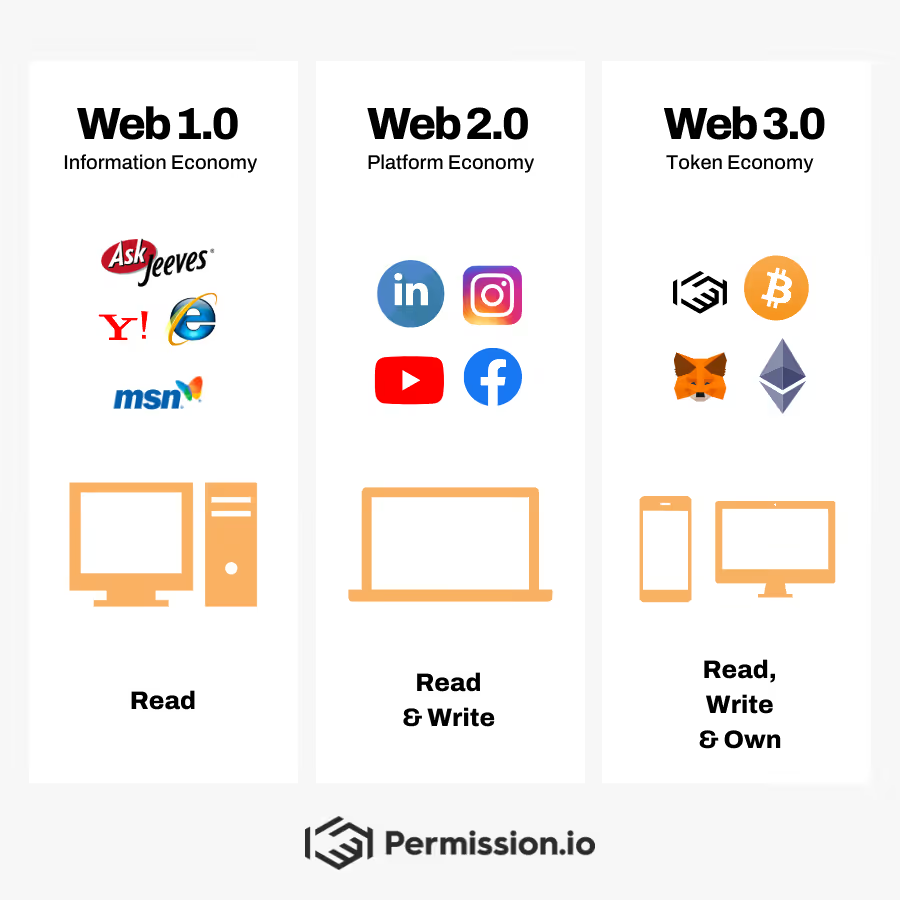
The dial-up days of Web1 gave way to Web2 tech giants that harvested and monetized consumer data without their knowledge or consent. The arrival of Web3 represents a power shift from centralized enterprise technology vendors to decentralized, blockchain-based platforms that give control to the data owner: the consumer.
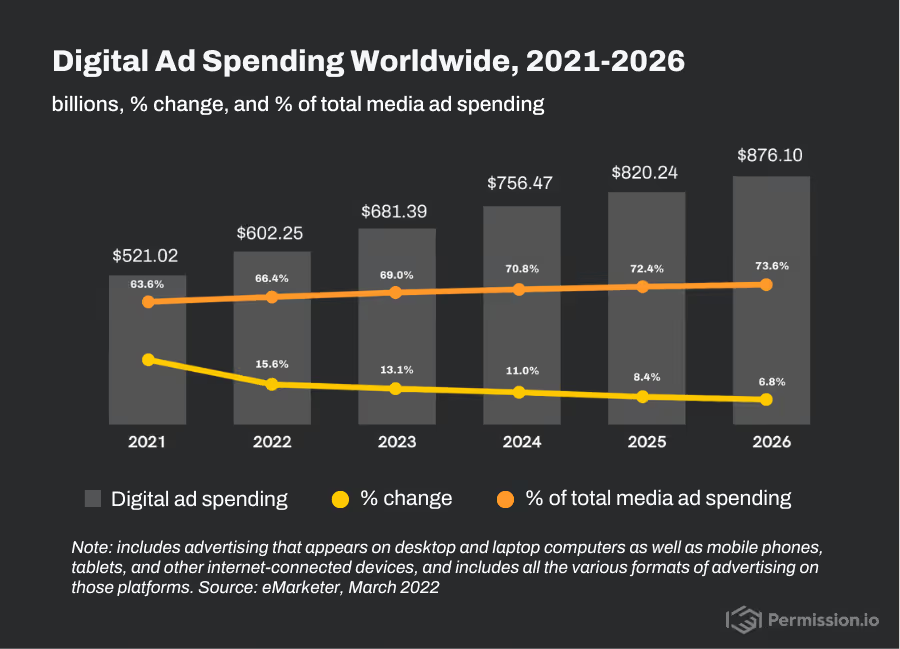
Consumer data: from EXPLOITATION to OWNERSHIP
As the saying goes, “if something is free, you are the product.”
Freemium Web2 business models made popular by Google, Meta (formerly Facebook) and other consumer-facing platforms generate billions in ad revenue. Consumers agree to allow these big tech vendors to collect, analyze and monetize their data in exchange for the privilege to use their platforms.
The advent of blockchain technology has opened the door for peer-to-peer transactions of digital assets, such as Bitcoin, non-fungible tokens (NFTs) and other cryptocurrencies.
While this itself is transformative, the ability for consumers to take greater agency/ownership of their data, including the ability to earn cryptocurrency rewards by sharing their attention and data with brands, enables a paradigm shift.
New solutions for a cookieless world
To highlight the significance of third party cookies, consider the following survey from Innovid: How important are 3rd party cookies for your current marketing strategy?

How will brands adjust as cookies crumble?
While first party cookies provide a more reliable means for marketers to understand consumer behavior, it is still limiting as the consumer is still unknown. Obtaining personally identifiable information (PII) such as name and/or email address is the ultimate goal for brands that seek ongoing and authentic one-to-one engagement with consumers.
Marketers will need to explore new ways to build one-to-one relationships with consumers en route to acquiring PII. Otherwise, CMOs and their agency partners will rely even more heavily on the Web2 consumer platforms that have become data overlords that rent audiences for advertising, sharing minimal campaign insights. While rent-to-own audience options would be ideal for brands, this is not feasible given Web2 business models and data privacy laws.
Zero-party data to the rescue
Understanding consumer behavior is paramount to a brand’s ability to deliver relevant, timely messaging. This is where the value proposition of a zero-party data platform becomes interesting for marketers in a cookieless world – imagine an opt-in rewards program that connects brands with consumers where time/attention are exchanged for a micropayment. The brand is able to tell its story to a qualified audience that has given consent to share information such as name and email. This quid-pro–quo is how zero-party data works: an equitable value exchange between consumers and brands.
Without the crutch of 3rd party data available for tracking, analysis and segmentation, brands will need to consider alternative means to obtain zero-party data.
If brands provide clear messaging and value exchange, consumers will share their data.
History tells us that consumers love free things (even if they are the product) as well as discounts. In addition to free or discounted items, consumers are also receptive to sharing data if it enables personalized or bespoke experiences. By leveraging zero-party audience platforms, brands can leverage one or more of these aspects to earn trust and attain fresh, fully-permissioned zero-party data.
To highlight how receptive consumers are when it comes to receiving something in return for their data, consider the following from Cheetah Digital:

Despite consumer interest, marketer knowledge and adoption of zero-party data is still in its infancy (stats below also from Cheetah Digital):

The value proposition and interest in zero-party data will accelerate as a cookie-free world becomes a reality. Investments in consent-based consumer platforms will become table stakes for brands that seek to remain relevant and maintain growth.
With proper data, permission, and orchestration, a brand can deliver an improved – or ideally- exceptional customer experience (CX). Per McKinsey, cookie degradation means brands will be pressed to earn consumer trust through compelling CX:
“The most prepared advertisers we studied are designing consumer experiences in which consumers actively consent to sharing data (for instance, transparency on data collected, visibility into value exchange, data collection seamlessly embedded into user experience). Indeed, experiences that are valuable to consumers tend to generate data as a byproduct.”
Brand touchpoints through micropayments
The ability to conduct financial transactions through ecommerce and payment platforms has been around for nearly two decades. While the definition of a micropayment varies (under $1 to $12), latency and cost factors have largely stymied mainstream use. As cryptocurrency adoption accelerates, retailers are accepting a variety of digital currencies as payment.
The list of notable companies accepting crypto payments is diverse, including: Starbucks, Home Depot, Overstock.com, Whole Foods, AT&T, DISH Network, AMC Theatres, Twitch (owned by Amazon) and more.
The ability to accept crypto payments extends beyond the largest retailers as 36% of small to medium businesses in the United States accept some form of crypto.
Serving as the backbone for credit and debit transactions, global payment processors such as Visa, Mastercard and Paypal are getting on board the Web3 bandwagon by supporting crypto, including NFTs.
During the 2022 Financial Technology Conference, Cuy Sheffield, head of crypto at Visa highlighted the NFT opportunity:
“Technology behind non-fungible tokens (NFTs), which are designed to be digital representations of real-world objects, could be set to strengthen the speed of commerce and therefore serve an important catalyst for the entire payments ecosystem.”
Financial institutions are also creating crypto-related products and services for clients. For example, Goldman Sachs supports Bitcoin-based loans and re-established a cryptocurrency trading desk, while peer Fidelity Investments allows clients to allocate Bitcoin to their 401K plans.
The above is interesting for brands and marketers as it means consumers are utilizing cryptocurrency in a variety of ways. Forward-thinking CMOs who seek innovative ways to drive digital engagement have a treasure trove of opportunities in Web3.
Web3 adds liquidity to loyalty rewards programs
Brands such as Marriott, Southwest Airlines and American Express have established industry-leading loyalty rewards programs. The value proposition of offering consumers perks for continued patronage is logical but requires significant resources. Facilitating loyalty rewards requires human capital and technological resources outside the means of many organizations. Perhaps the biggest hurdle loyalty programs face: liquidity constraints.
Blockchain-based rewards (e.g., NFTs or tokens) address multiple points of friction, including standard rewards programs that typically lock a consumer into that brand’s ecosystem. From a liquidity perspective, tokenized rewards can be transferred from one wallet (i.e., consumer) to another or used for a variety of purposes. This differs from rewards programs that limit ownership and site-specific use cases. In this vein, a universal rewards token (such as Permission’s ASK) expands liquidity exponentially, whereby a consumer is able to earn and use rewards across multiple brands.
Even during market downturns, technological adoption can accelerate
As we learned from the Web1 dot com bubble, not all companies survive market downturns, especially those without sufficient funding or sound business models. Adoption of blockchain and cryptocurrencies will continue fueling development of Web3 despite any “crypto winter.” Similar to the dot com bubble era, platforms that address market needs will prosper, while those without utility will fall to the wayside.
In the timeline below, adoption of the internet (1990-1998) and crypto (2014-2022) follow similar trajectories to reach 100 million users over an eight year period. While the dot com bubble in 2000 disrupted and bankrupted many online businesses, consumer internet adoption accelerated. By the end of 2003 – just three years after the beginning of the dot com crash – over 700 million consumers (11% of the global population) were online. If crypto adoption follows a similar pattern (assuming 2022 is a “bubble”) we can anticipate that by 2025/2026, crypto will experience widespread adoption.

Brands drive Web3 adoption and engagement through tokens and NFTs
Brands are also ramping up investments in crypto rewards, largely through non-fungible tokens (NFTs) and development of virtual worlds in the metaverse (e.g. Decentraland, Sandbox). For example, the world’s largest brewer and software company, as well as iconic CPG and lifestyle brands, are investing in solutions that enable next-generation brand engagement.
Established in 1936, Anheuser-Busch minted 1,936 NFTs to commemorate its foray into its virtual world, dubbed Budverse. Out of the lot, 1900 Core Heritage NFTs were minted ($99 each) and 36 NFTs were part of the Gold Heritage ($999 each). The NFTs represent different designs and vintages with a company press release stating each collectible is a “key to Budverse and can unlock exclusive benefits, rewards, and surprises.”
Other brands investing in Web3 include:
- Microsoft (Activision-Blizzard)
- Nike
- Luxury brands (e.g. Louis Vuitton, Burberry, Gucci)
- Coca-Cola
Smart contract protocols embedded in NFTs make them a powerful tool for brands to drive consumer engagement. In addition to artwork and collectibles, an NFT can serve as a digital key — opening the door for exclusive experiences in real life (IRL), online or in the metaverse.
Web3 is a team effort
Advertising agencies who have long acted as shepherds for brands are doing their part to prepare clients for the next iteration of the internet. The largest agency holding companies (e.g., WPP, Publicis, Dentsu) and independent agencies are acquiring boutiques, including the addition of executive avatars to deliver deeper digital experiences for clients. In addition to traditional media agencies, IT consultancies (e.g., Accenture, Deloitte Digital) are making moves to participate in Web3.
Web3 is a work in progress; however, the world’s leading brands, technologists and agencies are collaborating to build what will result in a more decentralized, consumer-centric internet. Blurring of real and digital worlds will accelerate, creating new revenue streams in the data economy. Instead of big tech companies dictating how, where, and when consumer data is collected and monetized, consumers are at the helm in the Web3 data economy.
Marketers seeking alternatives to audience rentals from big tech data oligarchs should consider joining the Web3 movement. Blockchain-based solutions open the door for new types of value exchange and engagement between brands and consumers. By enabling marketers to offer tokenized rewards, Permission provides the bridge to Web3 for consumers and brands to interact in a transparent, mutually beneficial way.
Rewards Marketing: The Smart Approach to Web3 Advertising
At its core, Web3 — powered by blockchain technology — is all about users owning their data, being properly compensated for it, and becoming part of the economic value chain on the web. Advertisers who wish to maximize their impact in Web3 need to embrace these concepts and implement new strategies that enable consumers to clearly understand how their data will be used should they give their consent and share it.
These days, everyone knows how valuable data is. Since most of us aren’t keen on giving away something that’s valuable for free, advertisers need to offer consumers rewards — tokenized rewards, in particular — for opting in and giving their permission. Luckily, with the right ad tech solutions in place, creating this opt-in value exchange can be a seamless, turnkey process.
If advertisers want to succeed in a world that’s increasingly driven by permission, they need to change the way they interact with consumers for two key reasons. First, consumers are more and more concerned about how businesses handle their data; a recent Cisco study, for example, found that 86 percent of consumers care about their personal data and want more control over it. Second, government regulations — including Europe’s GDPR, China’s PIPL and California’s CCPA — are forcing advertisers’ hands. As additional privacy laws continue to work their way through the legislative process, it’s safe to say the halcyon days of freely harvesting reams of consumer data are coming to an end.
And that’s actually a great thing.
Strong relationships — with spouses, friends and even brands — are built on trust. We trust Amazon to send items to our homes quickly and cost-effectively, we trust Uber to connect us with drivers in just a few taps, and we trust Home Depot to sell us the high-quality tools and supplies we need for home improvement projects.
If advertisers want to build trusting relationships with consumers and thrive in the permission-first era of Web3 advertising, they need to embrace rewards marketing. By asking consumers for their permission to collect data and rewarding them when they choose to do so, advertisers can gather coveted first-party data to deliver relevant, personalized content, all while strengthening trust and driving customer loyalty.
Over the last decade, consumers have evolved from being mostly carefree about how their personal data is used to becoming incredibly scrupulous about it. In fact, one recent study found that 71 percent of consumers worry about how brands manage and leverage their personal data. This makes perfect sense, as we’ve all heard countless tales of advertisers collecting data in ill-gotten ways and using it to make money.
The good news is that these deceptive practices have created a once-in-a-generation opportunity for forward-thinking advertisers that are ready to flip the script. Early adopters of permission marketing will begin to shatter these perceptions by operating in an open, transparent manner and telling consumers exactly what data will be collected and how it will be used if they consent to share it.
Simply put, these innovative advertisers will be able to set the gold standard in Web3 advertising while building trust and loyalty across their customer base — much to the chagrin of their competitors, who will ultimately be forced to follow suit.
One recent report found that 85 percent of consumers are loyal to brands that protect their data. And that’s a big deal: While loyal customers might only account for 15 percent of an organization’s customer base, they can be responsible for as much as 70 percent of all revenue. At the same time, loyal customers are also more likely to continue supporting the companies they love, which helps brands increase customer retention. Since a 5 percent increase in retention can translate into a whopping 95 percent increase in profits, organizations need to do everything they can to create loyal customers.
For advertisers, the path forward is clear: Embrace rewards marketing, be open and honest, and always ask for permission. With the right approach, the holy grail of first-party data from an army of loyal customers will be firmly within your reach.
This article originally appeared on Media Village and was guest authored by Permission.io founder Charlie Silver. Click Here to view the full article.
Don't miss anything
Join our newsletter for the latest news and product updates